LEARN: Digital Inclusion: The New Core Service

Core to Your Mission

We’re long past digital inclusion being a fun, optional service. This work has always been part of library services; now we must embrace it as core to our missions. This training provides a 4 step process to devise actionable services for a digitally equitable future.

Here’s how we prove that centering digital equity lifts everyone in the community.


Training description

You’re probably already offering basic digital inclusion services, and you might even have ‘stealth’ services where patrons don’t realize you are teaching them (like helping someone reset a password). But our communities face growing barriers to digital participation, and these basic services are no longer enough to answer their needs. Especially with federal funds on the horizon from the 2021 Digital Equity Act, libraries must be prepared to offer bold new services that reach our patrons where they are.

Fortunately, librarians are uniquely qualified to be local leaders because we can approach this work from the foundation of our professional values. Once we have a vision for digital equity, we can jump into blue-sky thinking to design library services for a better future.

The 4 step process shared in this session will translate your wild brainstorm into a plan you can actually implement. You’ll experience the process in real time as we start a hands-on workbook together, and you’ll leave with clear next steps to make your vision a reality.


“I particularly enjoyed Digital Inclusion: The New Core Service. The exposure to different library goals, missions, new technologies, and innovative programming expanded my personal goals along with the vision I bring to my work and my library.

Digital inclusion, like all DEI, is critical at this juncture in time. These themes helped to inspire and reorient my focus after a challenging year for the [redacted] Public Library and libraries in general.”

Librarian who attended this training

Learning objectives

  • Explore how digital inclusion work is already central to your library’s mission.
  • Find opportunities to reach further into your community with broader services to close the digital divide.
  • Swap ideas with colleagues and brainstorm solutions that fit your library’s unique situation.
  • Gather resources and tools to make your ideas possible.

Resources provided in the workbook include a cheat sheet for broadband jargon and acronyms, strategic questions for cutting through highly technical conversations and staying focused on patron services, and a find-and-replace vocabulary tool to help you maximize buy-in from partisan groups.

Digital Inclusion: The New Core Service WORKBOOK

Available for free to workshop attendees. Purchase any time for $15. (Two pages from this workbook are available individually as free downloads here.)


Formats and Options

This session is widely adaptable.

🌱 Beginner

🌿 Amateur

🌳 Old pro

An excellent introduction for anyone new at this. That might include longtime library workers who just haven’t heard the phrase “digital equity,” or it might include folks new to the library world with plenty of digital inclusion experience. Those with more experience will benefit from the higher interactivity of a workshop format, rather than a shorter talk.

💻 Virtual

👥 In-person

This training works well virtually and in-person. Groups in the same room tend to have the best discussion experience, but participation has trended strong in a virtual setting for this particular topic as well.

Duration
  • 10 minute intro & preview video – FREE
  • 25 minute talk
    • Best for a non-participatory webinar or keynote format
    • Does not include workbook
  • 1 hour webinar or session
    • Includes 30 minute talk, 20 minute hands-on facilitation, 10 minute Q&A, and workbook
    • Any group size: 5 attendees to 500 (though large groups depend on breakout rooms)
  • 2-3 hour workshop
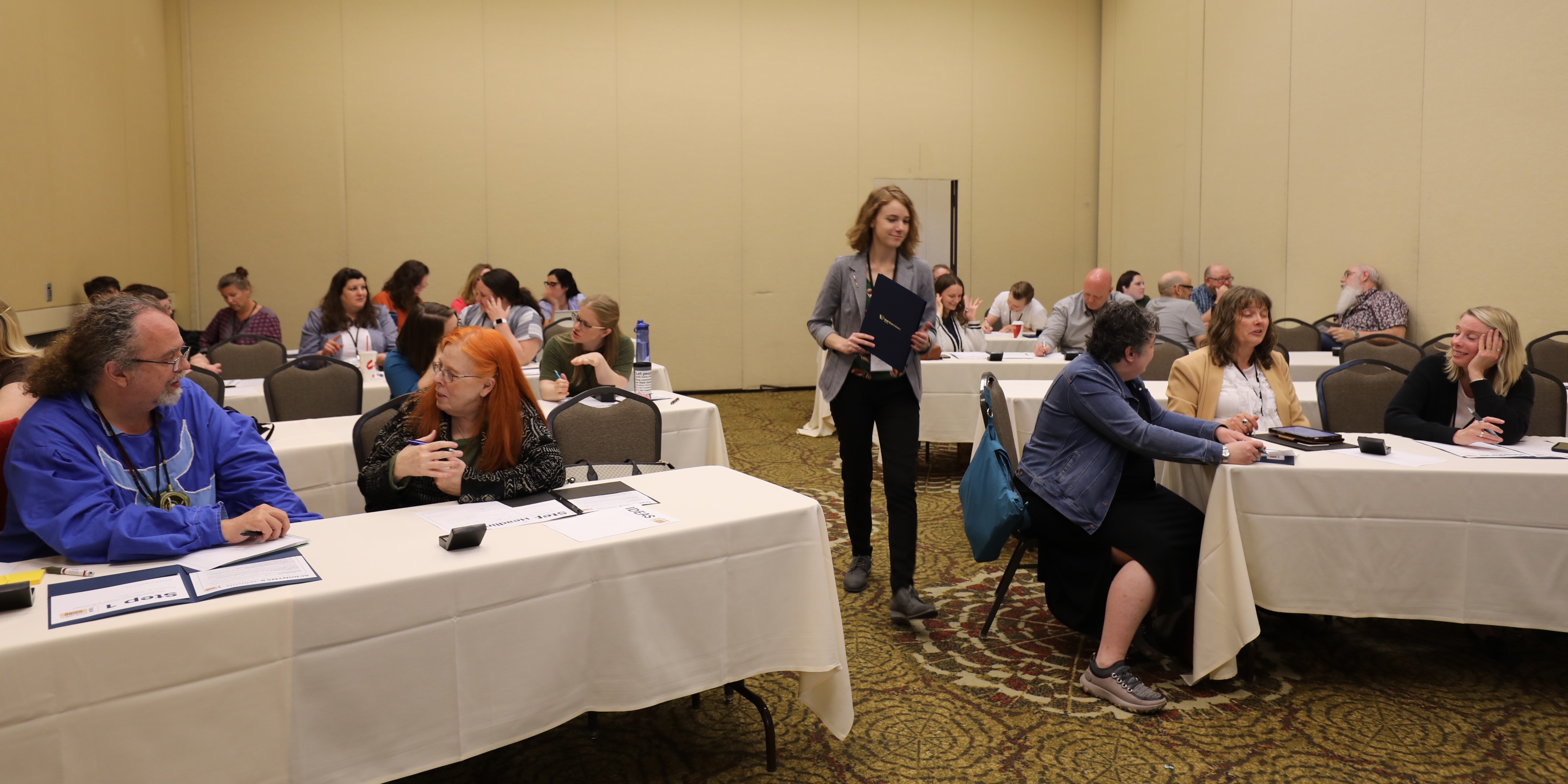
    • Includes about 50% presentation, 30% facilitated discussion, and 20% breakout group work, with ample time for Q&As and customization to fit attendee needs and interests
    • Excellent format for collaboratively designing new or improved library services, such as with library administrators, at a board retreat, or among a single team or department
    • Best for groups sized 10 to 100
  • NEW option: Premium Intensive Workshop
    • 3 hour hands-on learning experience, including locally catered presentation, facilitated whole group discussion, breakout small group work, emerging trends analysis, troubleshooting “idea swap,” and a speaker Q&A
    • Includes printed AND digital workbook for each attendee and organizer
    • Bonus 1:1 consulting call in advance of workshop, OR, group follow-up call with workshop attendees to discuss ongoing progress
    • Great fit for anyone looking to offer a high-quality training to the librarians they serve (such as a State Library Agency, regional association, professional organization, digital inclusion coalition or broadband alliance, etc.)

Pricing is flexible depending on your needs. Libraries for Digital Equity wants to get this information to as many librarians as possible. We’ll work with your budget.
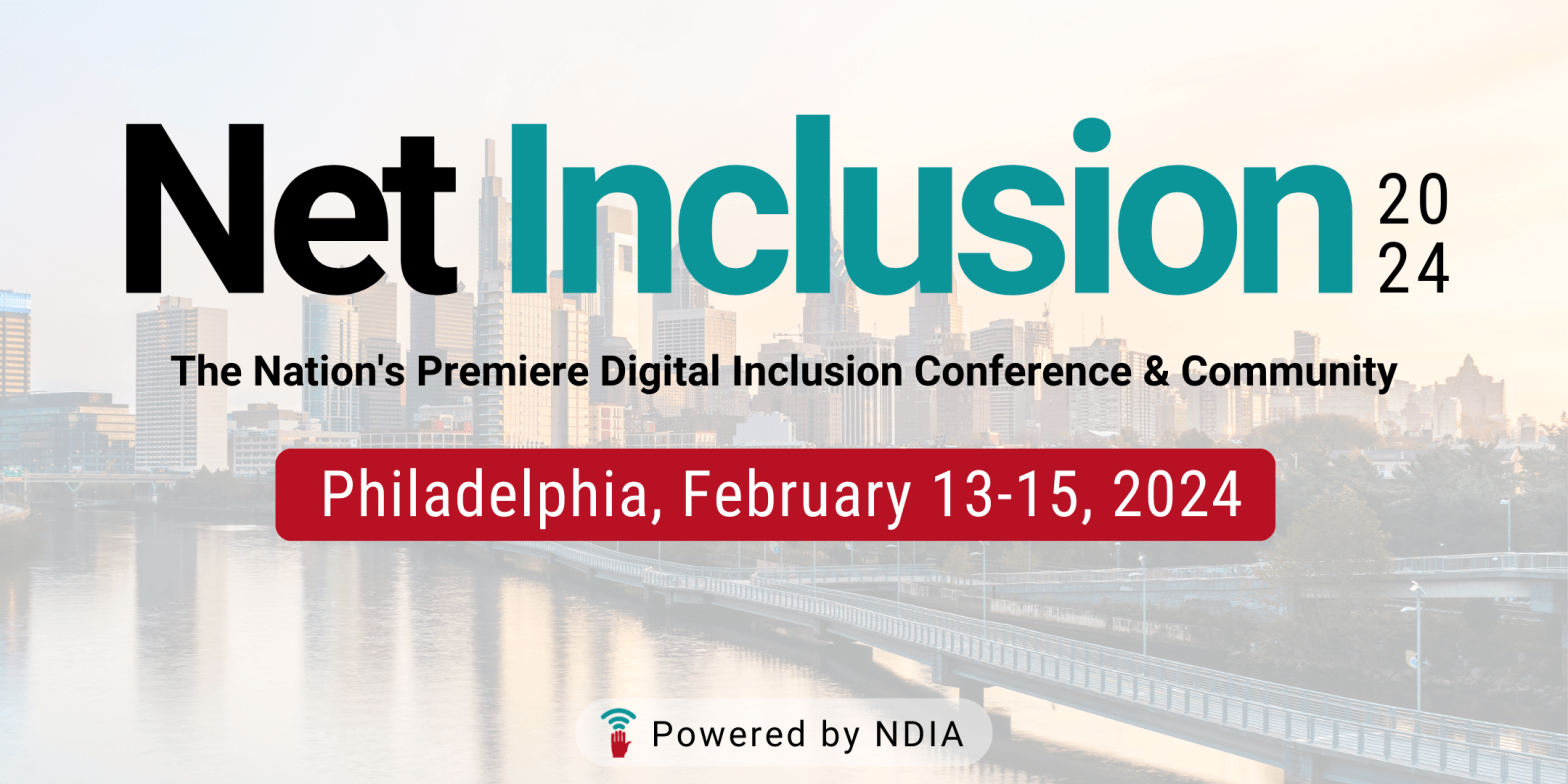
Preview: Net Inclusion ’24

Last updated: 2/5/24. This article will be updated to reflect changes to the schedule or new speaker announcements.

Anyone else excited for Net Inclusion, coming up in just two weeks?!

If you’ve been to this conference before, you know it’s a massive gathering of people working towards digital equity from just about every sector imaginable. Last year we met adult education instructors, statisticians, elected officials, economists, broadband providers, criminal justice reform advocates, and even a professional dog walker, not to mention all the library workers. This year should be even bigger: NDIA expects more than a thousand attendees.

And more exciting news: for the first time, NDIA invited attendees to propose sessions and panels for this year’s conference. The schedule is jam-packed with presentations, and the speaker list is a who’s-who of digital inclusion.

Of course, all that means the agenda can be a little intimidating… We combed through the line up so you don’t have to! Here are the sessions most relevant for libraries:

Tuesday (2.13)

Time slotTitle of session
10:30am – 11:30amAccessibility Toolbox for Digital Skills Training
Learn about the disparity in access to broadband service, devices, and digital skills training for people with disabilities, and feel more comfortable working with ALL people.
🎓Connecting Digital to the Adult Literacy Ecosystem
How can organizations serving adult learners meet their needs by reinforcing critical digital skills and providing other means of digital inclusion?
Lunch📡What to Expect from the FCC in 2024
We’re likely to hear about E-Rate cost sharing for library hotspot lending and school bus wifi, two pressing current issues. Also likely on the agenda: ACP.
1:15pm – 4:15pm🧭Digital Navigator Programs 201: Caring for Your Middle-aged DN Program
For those with digital navigator programs wondering what to expect at the one year mark and beyond, from seasoned DigNav program coordinators.
How Can You Engage the Disability & Accessibility Ecosystems?
Best practices to start engaging disability-focused organizations from square one.
🚶…or skip the afternoon sessions and visit the Charles Library on a Temple University digital inclusion walking tour!

And if your library is interested in makerspaces, creative labs, or digital expression for teens, you’ll want to catch the PhillyCAM meetup. (Directions available in Sched.)

Wednesday (2.14)

Time slotTitle of session
10:30am – 11:30am🧭Framing Access: Digital Navigators & Libraries
Examine the digital navigator model from an information seeking behaviors perspective. Featuring standout library leaders and catered specifically to librarians.
💸Modernizing the Universal Service Fund (USF) for Digital Equity
Discussion of the future of E-Rate, ACP, and other USF programs including future hotspot lending, from thought leaders at NDIA, Benton Institute.
Lunch🏛️Maximizing Federal Funding & Keeping it Flowing
We’re likely to hear what’s on the horizon for the nationwide Digital Equity Act Competitive Grant Program, probably opening this summer.
2:00pm – 3:30pm⚖️Creating Digital Equity Programming for Prisons & Re-Entry Programs
Technology access and training for incarcerated and re-entering people. No library speakers, but featuring experts in responding to the justice system.
🗣️Organized Advocacy: The Need for Local Coalitions & State Networks
The role of digital inclusion coalitions and local organizations in coordinating efforts at advocating for program funding and other support. No library speakers.
🗣️Without Political Power, There Is No Path to Digital Equity
Building and wielding influence locally and on a larger scale to push for political support to digital inclusion programs. No library speakers.
4:00pm – 5:00pm🧭Getting Started: Best Practices When Developing Digital Navigator Programs
Expert library leaders and other experienced program coordinators share guidance and advice for building a new digital navigator program.
🔬How Can Researchers Support Practitioners & Policymakers?
Guidance for using data and recent research to design programs, track metrics, and assess your success with digital inclusion programs.

A “Birds of a Feather” meetup for libraries was just announced – 4pm Wednesday, location TBD. (This article will be updated.)

Also, stay tuned for news on the Wednesday evening reception (and fight back those introvert tendencies – it’s worth the effort to meet new library/DE colleagues).

Thursday (2.15)

Time slotTitle of session
10:30am – 11:30am🧓Building Inclusive Intergenerational Technology Programs
Intergenerational digital inclusion programs give libraries a chance to address isolation and loneliness while also building community digital skills. No library speakers.
🧭By Digital Navigators for Digital Navigators: A Panel of Peers
Get into the grit of day-to-day business in a digital navigator program, and pose questions or hear advice from seasoned program coordinators.
📊Using Digital Skills Data to Tell the Digital Equity Story
Find real data on digital skills in your community to structure responsive services and to build your advocacy case. National Skills Coalition (best data source on digital skills in the US).
Lunch🤬Digital Inclusion Work in Difficult Political Environments
Candid discussion of charged environments where language around digital equity can be divisive.

Planning to be there? Find us through the attendee chat on the Sched app or website! We’d love to meet up and deliver some Libraries4DE swag. 😉

See you there!


Don’t miss a thing.

Subscribe to the Libraries for Digital Equity newsletter to be the first to know about funding, trends, and exciting new work.

NEWS: Deadline extended to comment on Fed $ for hotspots

Good news to all procrastinators and December email avoiders! The Federal Communications Commission (FCC) has given us one more week to draft and submit comments on their recent proposal to make wifi hotspots eligible for E-Rate support. Submit comments here.

The new deadline is Jan. 16, 2024.

In case you missed it, the FCC released a Notice of Proposed Rulemaking in November regarding wifi hotspot lending in libraries. They proposed that once Emergency Connectivity Fund (ECF) support for hotspots lapses, schools and libraries should have the option to apply for continued support for the ongoing cost of service to those devices with regular E-Rate funds. Like with E-Rate support for other services, this would likely provide a discount as a percent of the overall cost based on Free and Reduced School Lunch Program eligibility in the library’s legal service area.

This is a big deal!

Libraries cite cost as a leading concern as for why they do not have a hotspot lending program. Perhaps even more frustratingly, many libraries use grant funds to launch hotspot programs and then discover that the ongoing costs are unsustainable for their local budget, and they are forced to downsize or shutter a well-used resource. E-Rate has the benefit of being a (relatively) stable mechanism to support libraries in offering high quality internet to their patrons, and it has been since the 90s. Including hotspots as an eligible use of E-Rate funds is a logical update for the 21st century: it just makes sense.

So what’s next?

This notice means the FCC is considering all sides of the question before developing program rules which will determine things like eligible costs, allowable uses, and limits on funding. Submitting a comment is well-worth your time. It can take as little as five minutes to ensure your voice is heard in this crucial update to the only federal-based support for basic, ongoing library operations. While the actual changes to the E-Rate program likely won’t affect library budgets until 2025, we need to ensure library priorities are at the forefront of the FCC’s thoughts. We won’t get a better chance than this to ensure hotspot programs are sustainable.


Nervous about submitting a filing for the first time? Here’s an easy step-by-step, with a few sample comments at the bottom to get you started:

  1. Click here to submit an express comment.
    • Note for the completionists out there: If you would like to go into depth or share data from your specific experiences, use the standard filing instead of the express filing. The original Notice includes a series of questions, and the FCC especially encourages libraries who used the ECF for hotspot or device lending to share their budget figures, usage statistics, program results and lessons learned.
  2. Under Proceeding(s), type 21-31. It will pop up with “Addressing the Homework Gap through the E-Rate Program.” Select it.
  3. Under Name(s) of Filer(s), choose whether you are representing your library, another organization, or just speaking as yourself as a private citizen or resident. The FCC is supposed to take direction from anyone with an opinion, so feel free to just comment under your own name.
  4. You will need to enter a US address. This can be your library or place of business, but it can also just be your home address. Be aware that whatever you enter will become part of the public record, and could be available for others to view online.
  5. The final field says Brief Comments. Share your opinion! Don’t worry about using legalese or extremely formal writing. Use the same professional language you would use with your boss, and don’t overthink it. Your comment can be as long or short as you want.

Sample Comments: Feel free to copy and past the following (with edits to better fit your situation).

Example #1

“Thank you for proposing to allow hotspots to receive E-Rate support. My library circulates hotspots to our community and they are constantly in high demand. Our patrons use them for homework, telehealth, continuing education, job upskilling, and more. E-Rate support would allow us to increase our impact by offering hotspots to more library cardholders without a stable home internet connection.”

Example #2

“I am a parent of two elementary school aged children and I work remotely from home. Their homework is usually online, and our home internet isn’t fast enough for all three of us to be online at the same time. If it weren’t for the library hotspot we borrow, we would have to pick and choose who can be on the wifi all evening.””I am a parent of two elementary school aged children and I work remotely from home. Their homework is usually online, and our home internet isn’t fast enough for all three of us to be online at the same time. If it weren’t for the library hotspot we borrow, we would have to pick and choose who can be on the wifi all evening.”

Example #3

“My library used the Emergency Connectivity Fund to start checking out hotspots. Now that our funding has ended, we can only support a third of the devices with our existing budget. Every week I speak to patrons who are desperate to keep the hotspot they were using, and I have to explain we can’t pay for it anymore. E-Rate support for hotspots would enable us to offer the same number of hotspots we had during the ECF, and it would benefit our patrons’ lives.”

Remember that deadline to file comments: Jan. 16, 2024.


Don’t miss a thing.

Subscribe to the Libraries for Digital Equity newsletter to be the first to know about funding, trends, and exciting new work.

Digital Equity at LibLearnX 2023

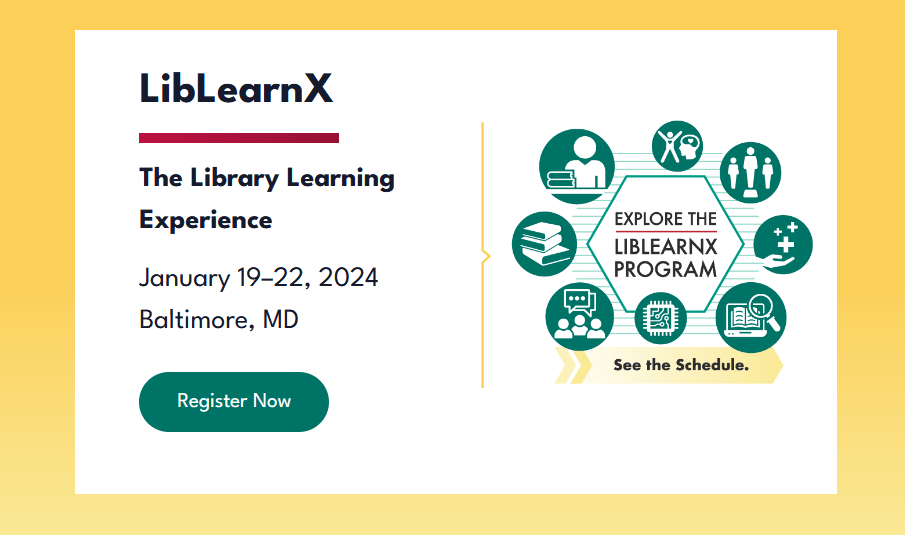
Coming up Jan. 19-22, ALA’s LibLearnX is happening in Baltimore!

There’s a great slate of sessions, speakers, and vendors lined up. Here are some scheduled items of particular note for digital inclusion practitioners.

Saturday, Jan. 20

10:20am-10:50amChatGPT is a Liar and other Lessons Learned from Information Literacy Instructors
Ideas XchangeWondering where generative artificial intelligence (AI) fits in information literacy instruction? This session will share findings from a recent survey of library professionals on how they are already teaching about and using AI powered ChatGPT in information literacy instruction and where they see potential opportunities and areas of concern. As we explore the topic we will cover issues ranging from what generative AI is and is not, “hallucinated” information, deep fakes, misinformation, biased training data, documenting use of AI, privacy, copyright and costs.
1:00pm-2:00pmUsing Federal Funds to Move from Digital Equity Plans to Implementation
Learning LabThe federal government is making historic investments in advancing digital equity, literacy, and inclusion so every American can affordably access and successfully use high-speed internet access to achieve their economic, educational, and social goals. Learn how your library can benefit from these historic federal investments and how you can leverage federal, state, and local funding to support your library’s and community’s digital inclusion goals.
1:00pm-4:00pmHow to Navigate Privacy Issues Involving Youth and Technology
AcceleratorChildren and teens may come to your library to play games on a library X-box, do homework on a school-issued Chromebook, or record TikToks on their smartphone. How do you navigate the privacy issues that inevitably arise when child and teen patrons engage with technology? This interactive accelerator session walks participants through a privacy literacy toolkit designed to help librarians navigate privacy issues and model for children and teens what it means to engage with technology in socially appropriate ways.
2:30pm-3:30pmBuilding a Digital Equity Strategy from the Ground Up
Learning LabSuccessful digital equity initiatives require long-term strategy and vision combined with on-the-ground flexibility and agility. Our library staff has leveraged the Affordable Connectivity Program (ACP), Long Term Device Lending programs, and technology education to address the digital divide in our communities. Faced with the familiar chicken-egg conundrum of tackling digital equity and teaching digital literacy to those who are the least equipped for both, learn how our library combined old-fashioned outreach with emerging technology solutions to address the issues we are hearing about from our branches and our customers.
4:00pm-5:00pmChatbot-based Learning Activities Mapped to ACRL’s “Searching as Strategic Exploration” Frame Knowledge Practice
Learning LabThis train the trainer program incorporates new advances in generative AI chatbots, such as ChatGPT, into a database searching skills workshop setting. The activities in this program take place in the ChatGPT environment, and do not require any previous database searching experience. While broadly geared towards information seekers reviewing literature in health fields, participants will be able to modify and adapt the example prompts to meet the needs of information seekers at their home institution.

Sunday, Jan. 21

10:00am-11:00amUpholding Trans Patron Privacy & Information Access
Learning LabDrawing from the expertise of the Intellectual Freedom Committee’s Privacy Subcommittee and the Rainbow Roundtable, this session will empower you and your institution to be more effective library workers and allies. This presentation will include small group brainstorming, innovative anti-surveillance programming and service ideas, and relevant example scenarios to get attendees discussing and networking.
12:15pm-12:45pmLibraries as a Resource Hub: How the Nashville Helps Website Connects Patrons to Providers
Ideas XchangeThe Adult Literacy Department at Nashville Public Library developed a one-stop-shop for helping Adult Learners overcome barriers keeping them from being lifelong learners. Nashville Helps is a quick collection for providing help to members of Davidson County in need of housing, healthcare, childcare, tutoring services, access to food pantries, adult learning classes, U.S. Citizenship, and so much more.
1:00pm-2:00pmStronger Together: A Summary of Priorities and Best Practices from National Heritage Month EDI Symposiums
Learning LabAs part of our longstanding commitment to ALA’s affirmation of EDI through the Library Bill of Rights, the San Jose State University School of Information will share two years’ worth of library EDI best practices gathered through our free online heritage month symposia featuring leaders throughout the LIS field.
2:00pm-5:00pmYou Had Me at Hello! Renovating Libraries for Inclusion
AcceleratorHow do you renovate a library for the missing patron – the patron whose needs are not met by the current space? Whether that’s a student with special needs, an immigrant, a working parent, a disabled senior or a freelancer, there are some people in every community who have space needs that your current library doesn’t satisfy.
2:45pm-3:45pmDigital Inclusion: The New Core Service
Learning LabDigital inclusion has always been part of library services; now it’s time to embrace it as core to our missions. This session provides a 4 step process to devise actionable services for a digitally equitable future. Resources provided in the workbook include a cheat sheet for broadband jargon and acronyms, strategic questions for cutting through highly technical conversations and staying focused on patron services, and a find-and-replace vocabulary tool to help you maximize buy-in from partisan groups.
4:00pm-5:00pmCirculating Roku Devices with Premium Subscriptions
Learning LabAs more films and television shows bypass physical release and are made available only through streaming services, libraries need to find ways to get their patrons the content they’re demanding. By circulating Roku devices pre-signed in to specific premium streaming platforms, specifically Acorn TV, Apple TV+, BET+, Discovery+, Disney+, Hulu, Max, Paramount+, Peacock Premium, and Prime Video, libraries can bring this much hyped content to their communities.
4:00pm-5:00pmNavigating AI in Education through a K-12 Librarian’s Lens
Learning LabAI will not only enable students to become more informed and become responsible users of technology, but also more effective creators of technology content. Librarians in this session will engage in meaningful dialogue and learn from other librarians who are paving the way to support educators in their schools in using AI technology that advances lifelong learning while meeting the diverse learning, cultural, and social-emotional needs of individual students.

Monday, Jan. 22

9:45am-10:15amUsing Machine Learning Technology to Make Unique Collections More Accessible
Ideas XchangeLearn about the Library of Congress’s experimental and ongoing project to test and compare three widely used and economical handwritten text recognition (HTR) tools for converting 1 million minimally descriptive handwritten folder labels into machine-readable text. Three machine learning API services are described and compared, as well as potential implications for large-scale transformation of handwritten metadata into fully searchable, machine-readable text will be explored.
10:00am-10:20amEmpowering Future Scholars Through High School Information Literacy Workshops in Academic Libraries
ShopTalkAt a time when calls to remove books from school libraries abound, academic libraries can serve as vital sanctuaries for students to explore diverse materials and viewpoints, all while having a blast. Familiarizing students with college-level research tools early on can ensure a smooth transition to college and a successful first year. Attendees will learn how to create a student-centered experience that not only imparts essential information literacy skills but also leaves students feeling like they’ve had the full college experience in just half a day.
10:30am-11:00amTeaching about Bias and Trust in a Politically Charged Environment
Ideas XchangeIn this interactive session, hear how librarians at three libraries used evidence-based strategies to help students recognize bias in media sources, while also instilling trust in reliable, fact-based institutions. The presenters will share their strategies and perspectives for teaching these important skills in a state where the political landscape leans heavily toward a single political party.

To see the full schedule, visit https://2024.alaliblearnx.org/.

See you there!

Don’t miss a thing.

Subscribe to the Libraries for Digital Equity newsletter to be the first to know about funding, trends, and exciting new work.

WATCH: Why digital inclusion is our responsibility

Watch an early pandemic era super quick training video for librarians, aimed at decision makers wondering which services to prioritize in a time of chaos and uncertainty.

(Transcript available below the video)

This work, including the transcript, is licensed under CC BY-NC 4.0.


SHOW TRANSCRIPT

“Earlier this year, a librarian told me about a patron who had been working in hospitality all of his life, with low pay and long hours. He didn’t have a high school diploma, and in his words it felt impossible to get out of these types of jobs. For years he had been trying to get his GED while working two or three jobs at a time. He used to bike to the library at the end of his shift—sometimes around 1am—to use the library wifi and submit assignments or take tests. He told the librarians he had just about given up, because it felt impossible.

And he’s not alone. Over a third of very low income Utah households don’t have home internet. Even of people making up to the median income of $75,000, 1 in 10 still doesn’t have any type of connection, and many even lack devices. More than 250,000 Utahns rely on cell phones as their only method of reaching the internet.

The information age offers an unprecedented amount of economic mobility. There are thousands of online GED programs or advanced certifications, fully remote jobs, free financial tools. But the economic mobility the internet offers is only available to people who can access it. That gap between opportunity and access is what we call the digital divide. That’s what digital inclusion is trying to answer.

Digital inclusion has three parts. Sometimes we call it a three legged stool, because it won’t happen without all three legs. Libraries have historically provided every one of these legs. For 30 years, we’ve been providing wired internet connections in the building and now wifi. Public computers are one of the best ways for people to use devices when they don’t have their own. And digital literacy programs are a staple for library services, from classes on filing your taxes online to a welcoming reference desk where people know they can ask for help with e-books. So if we’re already doing digital inclusion work, is there even any room for growth?

Yes. Digital inclusion is the work. Digital equity is the goal. Digital equity means everybody has the tools they need to participate fully in our information age. We still have a long way to go before we move that progress bar all the way to digital equity.

Now, libraries are already evolving to get us closer to this goal. I’m seeing things like device lending or even giving away refurbished devices, library wifi in parks or other public spaces, dedicated tech mentors who help people build confidence in the digital world. And every time these programs work, there’s one thing in common: these libraries are defining digital inclusion as a core library service. In fact, this quote came from one of those librarians.

“If the pandemic has proved anything, it’s that access to digital information is so important to democracy, freedom of information, and education. Digital inclusion programs should be at the forefront of every municipality, library, or educational institution.”

In the Grand County Public Library here in Utah, digital inclusion is a priority. The gentleman I mentioned earlier who was trying to get his GED saw this for himself. The library checked out to him a Chromebook and a hotspot. He carried them everywhere. With those devices he could work on schooling whenever it was convenient: in between jobs, on breaks, sometimes in the middle of the night. He eventually came back to the library to return these items, and he had tears in his eyes. He said that thanks to that library technology, he had finished his program and gotten his GED. And, a little while later, the librarians learned that he got his first job outside the hospitality industry, something that had been his goal for years.

That is digital equity: access to the internet, a device that doesn’t hold you back, and the ability to navigate the digital world effectively, productively, and safely. Librarians are the experts on information access, and that positions us to be leaders in the fight against the digital divide. Because digital inclusion isn’t just our work: it’s our responsibility. So let’s work together to make this vision a reality for all of our communities.”


Enjoyed this video? There’s more where that came from…

Contact LL4DE about hosting an Idea Lab.

In these fun, low-pressure labs originally started at the Utah State Library, LL4DE founder Liz Gabbitas teaches a 10-15 minute micro-training on a niche topic of your choice and then facilitates a 45 minute brainstorming session with participants.