INTERVIEW: A Digital Navigator speaks out

Libraries4DE found a digital navigator willing to give us the down and dirty from behind the scenes in their library’s digital navigation program. Check out their tips on surviving this high-burnout role, secrets they won’t tell their boss, and suggestions on what your library can do differently.

This interview is part of the Digital Inclusion Week 2024 series (#DIW2024). It was conducted by Libraries4DE editor Bernard Ino and transcribed and adapted for this article by managing director Liz Gabbitas.


Digital navigator programs have had their moment in the sun. By now, it’s old news. We’ve been hearing about “tech mentors,” “internet safety coaches,” and various other digital navigators for years; but the pitch usually comes from the people designing the programs, not the ones actually working with patrons. Even when the program mastermind is the digital navigator as well, they’re often Librarians (with a capital L for the MLIS).

I wondered how things look for a digital navigator who’s never worked in a library before. 

To find out, I met up with one. The following interviewee is a digital navigator. They got involved with this work after looking for a part-time job that could use their computer skills but keep them engaged with other people. In order to get the dirty details, we’re keeping this anonymous. Our conversation is transcribed with edits for readability.

~ Bernard

Libraries4DE: Thanks for agreeing to talk with me! I’m so curious to hear your thoughts.

Digital Navigator: Sure, I’m happy to share.

L4DE: Let’s jump right in, then. How long have you been a digital navigator?

DN: Okay, so it’s been… I think two years? I started during the pandemic, so time gets kind of messed up.

L4DE: Yeah. So the library had already established the digital navigator program, right? It wasn’t—you weren’t involved with creating it at all.

DN: Right. I think they started in 2019, then went virtual in 2020, and then went back to in-person by 2021 before I joined. All of the original navigators were gone by then, and I only overlapped with a few people from the—kind of the second shift. Within a couple of months I had been there the longest out of anybody. That’s still true, by the way. I’ve had three managers.

L4DE: So what was the mood when you first came on board?

DN: I would say cautiously optimistic. I think there had been such a rush of excitement that the library could brag about this cool thing it was doing during COVID, and they felt like this program would evolve into the next cool thing. You know? Like, digital navigators were cool, but now we need you to be the next big trend too.

L4DE: Okay. And what would you say is the mood right now?

DN: Exhausted. (laughs) Just ****ing exhausted.

L4DE: Is that for you and the other navigators, or management, or what?

DN: It’s both. I mean, I’m seeing what you library people are going through—man, it’s…it’s ****. But like, that exhaustion is everywhere, and it’s just not—you can’t look at what the team is feeling and think everything is fine. If nothing changes, we won’t be here next year.

You can’t look at what the team is feeling and think everything is fine.

If nothing changes, we won’t be here next year.

L4DE: What do you mean?

DN: Okay, so my job is paid by a grant right now. It used to be a different grant, and in between for a while it was something in the budget they moved around, and—I don’t know, but the point is, I never know if this job will keep existing. Me and the other digital navigators, should we be looking for jobs? Because the grant is ending. Like, I’ve worked for nonprofits before. I get it. But I’m not dedicating my life to this. I’m not writing grants off the clock to keep the program running, or volunteering when the funding runs out. It’s my job! And I love what I do when I get to actually do it, but it’s not part of my identity, you know? It’s gotta be stable, a stable job and a stable program. It’s super fulfilling, but I’m not going to do it on my own time for free, you know? Is that—

L4DE: Sure. But that’s the case with a lot of people, and a lot of library jobs.

DN: No, it’s—okay, so maybe a lot of librarians feel like they could just switch jobs within the library. I don’t know. Maybe they do! But that’s not the way anyone thinks about us.

L4DE: “Us” meaning digital navigators?

DN: Yeah. We’re not supposed to—they gave us really clear training that’s like, “Here’s how to help them put a request on a hotspot, but don’t you dare actually check out a hotspot to them. That’s for real library staff.” 

L4DE: Whoa.

DN: Yeah! So me and my whole team, I’m treated like we’re this totally separate program that’s just using the library’s building or something. Like, I could be helpful if you’d just let me. Sometimes people don’t show up for stuff, and I’m just sitting around for my shift. I could shelve, or cover the desk, or—

L4DE: Are these rules, like set policies, or are they just—is it a culture thing at your library?

DN: I don’t know. That’s—it’s above my pay grade or whatever. But if, like, someone called in sick and they didn’t have anyone to cover, they would close the library early rather than have a digital navigator cover a desk shift. I mean, I’ve actually seen it happen. We’re just… we’re not library employees. Not really.

L4DE: Does the library want it that way, do you think?

DN: Either the library does, or other librarians do. You know, I was really stunned when I heard the phrase “information…” —what do they call librarians?

L4DE: Information professionals?

DN: Yeah, “information professionals.” Like, that’s what I do!

L4DE: Oh yeah, I guess the—

DN: I mean, I know it’s more…more complicated, I guess, the whole—the librarian thing. But why isn’t this job already part of being an “information professional?”

L4DE: Well, it’s a different skill set, isn’t it?

DN: No! Not really. One time someone tried to explain the—what do you call that thing, when a person asks a question at the desk and you have to figure out—

L4DE: The reference interview?

DN: Yes, exactly! So a librarian was explaining the whole idea of a reference interview to me, and I was just thinking, well that’s exactly what I have to do. Like, they should teach digital navigators how to do a reference interview.

L4DE: What about the tech skills? You have a background working with computers. That’s not—I don’t think that’s common with library workers.

DN: Look, I would never tell the library director this, but anybody could do my job. I wanted it because I liked tech, but honestly, one of the best navigators on the team came in with almost no computer skills. You have to get satisfaction from helping someone, not from showing off your tech skills. It’s all about attitude, being excited to learn. Pretty much everyone at my library is like that, not just the digital navigators. So really, any one of them would be amazing at teaching computers. You just have to be willing to get excited about learning alongside the person you’re teaching. If that was—if everybody thought that, then the digital navigators wouldn’t have to be this weird, temporary program. Because it seems like the library doesn’t even want to claim it. They’d rather have it separate.

Anybody could do this job. It’s all about attitude. You just have to be willing to get excited about learning alongside the person you’re teaching.

L4DE: So what’s the solution? Do you—should digital navigators be cross-trained for other library jobs, or should they be separate? Should libraries hand off their digital navigators to some other group, like the health department or senior center or whatever?

DN: Well it depends on what you want to get out of it. My city actually did that, the handing—the second thing you said.

L4DE: Wait, your library handed off their navigators? But I thought—

DN: No, that’s—they tried.

L4DE: (laughing) You’ve got to explain this.

DN: They tried to get rid of us but… (laughing) Okay, so there was some weird political stuff. I don’t know. But for whatever reason, the city decided to shut down my library branch, but keep the digital navigators. So I’d be sitting there with my little sign offering tech help, and people would come up with a big stack of library books going “What do you mean the library’s closed? Well, when’s it gonna open?” And I’m trying to—I’m explaining, but like, I don’t wanna—

L4DE: You don’t want to be the bad guy.

DN: Exactly! I’m telling them, “Okay, I’ll pass on your feedback.” But you know that’s the last thing the city wants to hear. “Hey, you closed a really popular service and people are complaining.” Yeah, no one at the city cares.

L4DE: Wow.

DN: Anyway, I think that was one of the real drawbacks with having our program so separate from the rest of the library. Like other departments, they could pass their customers between each other. But I didn’t have that, like, support from other library staff. I couldn’t say “oh hey, here’s a quick resource right here in our collection.” I’d have to refer them to a completely different building. I was just in a community center.

L4DE: You said “was.” Is that past tense? Are you not—

DN: Oh, they moved us back. Yeah we’re library employees again.

L4DE: Do you feel more supported now?

DN: Kind of. I mean, we’re definitely part of the library this time. We have library name tags, and we can help people use e-resources and stuff. That helps a lot. But I still wish I didn’t have to send them away to talk to someone else if they have—you know, a problem with their library card or something.

L4DE: Why do you think that’s still off-limits for you, for the digital navigator team?

DN: This sounds weird, but I think upstairs they see how fast we burn out and they’re scared we’ll infect the librarians.

L4DE: The upstairs? Wait, infect—what?

DN: (laughing) Sorry, bad word choice. Like, all the management people see how bad our turnover is, and they’re worried we’ll make the rest of the library burn out at a higher rate, too.

L4DE: What do you mean? What’s the burnout rate?

DN: I don’t know, like, 100%? 90%, maybe. At my library, everyone who worked there in the first two years is gone now. Not even the manager is still there. I’ve met digital navigators at other libraries, and no one’s been there longer than a year or two. And I’m not sure how much longer I can do this. My job was—I’ve been here longer than anyone else on the team, and that’s only because I care about—it’s weird, but I think this is the first time I’ve ever, like, really believed in my job? Like I want the library to succeed. I want this program to work. You know?

L4DE: Yeah. I remember when—that’s the same thing I said about my first library job. I think that’s a library thing.

DN: Probably. My coworkers have said that too. Like, if it was a business doing this, or even a nonprofit or something, there’s no way I’d have stuck it out this long. But you get the whole library experience here. It’s chaos, but it’s so, so rewarding.

L4DE: Even plunging toilets? That’s the stereotypical experience—

DN: Oh yeah. Overflowing toilets, people screaming at you, running around trying to find keys, having the—one time, there was this talent show or something going on in the auditorium, and I guess maintenance had turned the thermostat off for the night? So it was sweltering, just packed full and so hot. And I’m running up and down the halls trying different offices, looking for the—you know.

L4DE: Yep, sounds like working in a library.

DN: (laughing) Right?! People asking where the bathrooms are, wanting me to call the police on kids for playing too loud, telling me their conspiracy theories, and it’s—

L4DE: (laughing) Oh man, the conspiracy theories…

DN: Yeah, and it’s never useful theories. Like, I’d love to know who is smearing poop into the carpet, you know? I’d like a conspiracy theory on why the drinking fountains never work. I’d like—well, anyway.

L4DE: Man. 

DN: It’s—yeah.

L4DE: Okay refocusing. It kinda sounds like you love it. Not to editorialize, but—

DN: No, totally. That’s the only way I survive. I love it. It doesn’t matter how messy it is on the back end, or how confusing it is when HR asks me my department code. Like, what? I don’t know. I get to come in to work, help people with really frustrating problems, and be a safe place to ask questions. It’s just—it feels so good. My coworkers are chill, my manager is at least trying. I think she—she knows we need more support, and she’s trying. And at the end of the day, I get a paycheck. So far, that’s enough to keep me from burning out.

I love it. I get to come in to work, help people with really frustrating problems, and be a safe place to ask questions. And at the end of the day, I get a paycheck.

So far, that’s enough to keep me from burning out.

L4DE: On that note, I want to ask about your boss. This interview is supposed to go up during Digital Inclusion Week, and this year’s DI Week theme is “Mobilizing Towards Sustainability.” I think one of the criticisms I see the most about digital navigator programs is that they’re not sustainable.

DN: Oh yeah, totally.

L4DE: Tell me—first, tell me if you think that’s a misconception—

DN: It’s not. I’ll just tell you that. It’s not a misconception.

L4DE: Okay, then tell me what you think your boss could do differently, or if making a digital navigator program sustainable is outside what one manager, or one library, can do?

DN: I mean, that’s a hard one. My current boss does a great job at helping us set boundaries. I think that’s important, and it really helps. Like, I had one manager that told us, “Always do anything you can for the client!” She would go to people’s houses to help them set up routers or whatever, or stay super late after closing because she wasn’t done with someone. That was—it was a mission for her, not a job. Like, this was her purpose in life, I think. But she’s gone now. No surprise.

After she burned out and quit, we got this manager we have now. She treats this like a job, not a mission, and she treats us like we’re all just—you know, employees. Which we are. At first clients were really upset we wouldn’t give them our cell phone numbers and text them all the time for help. But she—the manager—she got the library to set up a phone extension that goes straight to us. So now we can tell people, “Sure, we can help you set up your router at home. Just call the library, dial our extension, and we’ll talk you through it as long as we’re open.” It makes it easier to say no if clients ask for something we can’t do, too. It’s so much better.

L4DE: Wow. That seems like such an obvious fix, but—

DN: Exactly! Now it seems obvious, but before, the library just accepted that their digital navigators had to give 110% all the time until they burn out. So I really appreciate that my manager helps us treat it like customer service, not—like, you know—on-call doctors.

I appreciate that my manager helps us treat [digital navigation] like customer service, not like…on-call doctors.

L4DE: And is that helping keep people in the job for longer?

DN: I don’t know yet. She’s only been here for like—maybe six months? So her changes are still pretty new. But I do think new people on the team seem a little happier. And the ones that have been here longer—

L4DE: Like you.

DN: Yeah. We’re still pretty exhausted from all the **** we’ve been through. But it’s a little better. At least I don’t feel like I have to quit for the sake of my mental health. There’s been some points like that in the past.

L4DE: Okay, but you said earlier you don’t think this will last into next year.

DN: No, that’s—if they don’t have funding, yeah, it’ll die. And I’m not gonna find the money for them. That’s the upstairs job. It’s just—I’d really like to never get another email that says, “Hey, just so you know, if we don’t get another grant your job goes away.” Like, I know budgets are tight but can’t the library figure it out? Maybe one less part time worker from every department so you can keep one part time digital navigator permanently? I don’t know. That’s above—like I said earlier, above my pay grade.

L4DE: Right. It’s hard.

DN: Yeah. But I’d like to keep doing this, if I can.

L4DE: That’s great. Well it’s been really interesting—enlightening—hearing about your experience.

DN: Sure. Hopefully this is what you were looking for.

L4DE: Oh yeah, perfect. Do you have any final thoughts? Any advice you want to give other libraries or their digital navigators?

DN: Well that’s—I mean, I can only tell you my perspective. Maybe stuff is totally different at other libraries. But for me, I just want to be part of the library team. I hope other digital navigators are supported, and trained well, and paid well. Man, that’s—I guess my advice is just to value your digital navigators like you value any employee you want to see stick around. We can be a huge help to the whole team.

L4DE: Fantastic. Thanks so much for sitting down with me.

DN: No problem. Oh, and to my fellow digital navigators: good luck!


Bernard Ino is Libraries4DE‘s lead editor and a contributing writer. He is a librarian and hiking enthusiast from the southwestern US with a background in investigative journalism and a passion for uncovering trends.

Don’t miss a thing.

Subscribe to the Libraries for Digital Equity newsletter to be the first to know about funding, trends, and exciting new work.
LEARN: Free trainings for Digital Inclusion Week 2024

We’re just a few days out from Digital Inclusion Week (#DIW2024) and this year promises to be bigger than ever.

Fresh off the heels of the DE Competitive Grant application window closing, the first full week of October is a chance to celebrate each other for the work that goes unnoticed the rest of the year. It’s “a national week of action to elevate digital equity throughout the country” (via DIW2024 organizers National Digital Inclusion Alliance).

Libraries for Digital Equity is hosting 3 events over the week, all free and open to anyone.


Our #DIW2024 events

How To: Sustainable Electronics Recycling and Refurbished Computer Distribution at Your Library

How-to Webinar

Tuesday, Oct. 8

2:00pm-2:45pm EDT

Join us for a special webinar with PCs for People! You’ll get actionable ideas for advancing device access and sustainable e-waste practices. Our speakers will share stories that have worked for other libraries, plus tips on how to connect your patrons with their service. Don’t miss this one!

PCs for People is a non-profit 501(c)(3) organization which helps to bridge the digital divide by making affordable refurbished computers and internet service available to low income households.  They provide organizations with no-charge data destruction and e-waste recycling services and then refurbish computers for redistribution.


Anonymous interview: a digital navigator speaks out

Interview

Wednesday, Oct. 9

10:00am EDT

“If nothing changes, we won’t be here next year.”

A digital navigator speaks out

We found a digital navigator willing to give us the down and dirty from behind the scenes in their DN program. Check out their tips on surviving this high-burnout role, secrets they won’t tell their boss, and suggestions on what your library can do differently.


Live video: 5 trends to watch in libraries and digital inclusion

Video micro-training

All day Thursday, Oct. 10

5 Trends to Watch in Libraries and Digital Inclusion

We’re still celebrating! Thursday morning we’ll release a new micro-training covering the latest and greatest from digital equity innovators across the country. You never know – you might find the inspiration for your next big thing.


Events from elsewhere across the web

DI Week doesn’t have to stop yet. There are great organizations doing free events all week long. Check out these ones you and your library colleagues may be interested in.


Building for Digital Equity (#B4DE) livestream event

By Institute for Local Self Reliance

Mon. 10/7, 3pm-4:15pm ET | Register

“For our third #B4DE of the year, the theme will be “Coalition Building for Success” and will bring together hundreds of frontline digital inclusion practitioners from across the nation to delve into the importance of working in coalition to grow the digital equity movement, especially as Digital Equity Act grant programs are being established. As with the previous #B4DE events, the Digital Inclusion Week live stream will be co-hosted by NDIA’s Pamela Rosales and ILSR’s Community Broadband Networks Initiative Director Christopher Mitchell.”


Digital Inclusion 101

By National Digital Inclusion Alliance

Wed. 10/9, 2 p.m. EST | Register 

“Digital Inclusion practitioners have been working to end the digital divide for decades. Digital inclusion is a multifaceted issue that takes time to understand and NDIA is here to help set the stage for what you need to know!”


The Library Frontier: True Grit

By Community Tech Network

Thur. 10/10, 12pm-1pm PT | Register

“Join us for a continued discussion on our libraries’ crucial efforts to bridge the digital divide across Texas, New Mexico, Oklahoma, and Tribal Lands. This webinar will feature insights from panelists Bo Ford (Digital Equity Program Manager, New Mexico State Library) and Taylor Meriwether (Technology and Digital Accessibility Officer, Oklahoma Department of Libraries) who will share their experiences and strategies in addressing digital inclusion in these regions. Attendees will gain a deeper understanding of the challenges and successes in expanding access to technology and digital resources in underserved, rural, geographically isolated, and diverse communities.”


Why #DIW2024?

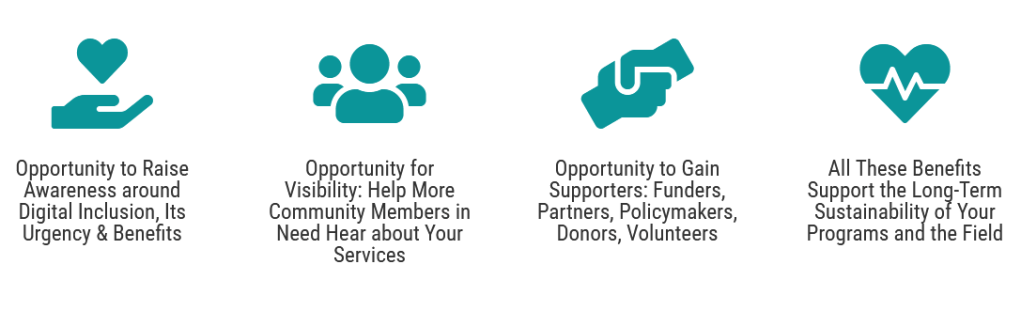
This is the 8th annual Digital Inclusion Week, brainchild of NDIA. Here’s their reasoning, and 4 ways organizations benefit:

We’re living in a pivotal time for digital inclusion action. More resources than ever are available now and will continue to be released to support digital inclusion work. Take the opportunity to share your work, offer services to your community, raise awareness, and gain supporters, who may be key to continuing digital inclusion. 

National Digital Inclusion Alliance

As we see federal law turn into actual funding for digital inclusion, now is the time to mobilize and create a lasting impact. “Stronger Together: Mobilizing Towards Sustainability” is our theme for Digital Inclusion Week 2024. We invite advocates, policymakers, community leaders, educators, researchers, and others to come together this week – and all year long – to advance digital equity nationwide.

Angela Siefer, NDIA Executive Director

About National Digital Inclusion Alliance: NDIA advances digital equity by supporting community programs and equipping policymakers to act. Working collaboratively with more than 1,800 digital inclusion practitioners, NDIA advocates for equitable broadband access, tech devices, digital skills training, and tech support.


Finally, let us know if your library does something to mark the week. Are you hosting a device recycling drive? Debuting new hotspots? Holding your regular tech help hours? We’d love to interview you about your experience. Reach us at contact@libraries4de.org.

Don’t miss a thing.

Subscribe to the Libraries for Digital Equity newsletter to be the first to know about funding, trends, and exciting new work.
NEWS: So long, equitable internet

The US Supreme Court just overturned Chevron v. The Natural Resources Defense Council, a 40 year old precedent for how government works.

Read: Supreme Court just made it harder for federal agencies to regulate in sweeping ruling

6/28/24 via Nina Totenberg, NPR

This is big news for anyone interested in the way technology (and Big Tech) shape public policy, and vice versa.

It comes just a day after the Federal Communications Commission (FCC) took the next step in supporting WiFi hotspot lending in libraries. The FCC released draft rules for amending the E-Rate program, adding allowances similar to the bygone Emergency Connectivity Fund. Libraries would see support for a percentage of their hotspot costs, up to 90% in school districts with the highest Free & Reduced School Lunch Program eligibility.

This is a big deal!

Now that 1 in 10 US households is not connected to the internet, hotspot and device lending programs are critical lifelines for our most vulnerable community members.

We’ve been advocating for federal support for these services at reliable community anchor institutions since before the pandemic.

  • Libraries cite cost as a leading concern as for why they do not have a hotspot lending program.
  • Perhaps even more frustratingly, many libraries use grant funds to launch hotspot programs and then discover that the ongoing costs are unsustainable for their local budget, and they are forced to downsize or shutter a well-used resource.
  • E-Rate has the benefit of being a (relatively) stable mechanism to support libraries in offering high quality internet to their patrons, and it has been since the 90s.
  • Including hotspots as an eligible use of E-Rate funds is a logical update for the 21st century: it just makes sense.

We’re also still reeling from the FCC’s decision to reclassify broadband as a telecom service under Title II of the Communications Act (i.e. the decision to restore “Net Neutrality”).

  • This is a fantastic outcome for our patrons; it means their internet service providers can no longer offer paid prioritization to some traffic and not all.
  • The measure is meant to prevent discrimination against low-income users or simply casual internet users, and to prevent tech giants from making deals that guarantee higher speeds for their services instead of a competitors.
    • Imagine getting dropped from a work Zoom during high traffic hours because Netflix paid to ensure they are always connected to your TV…

Why does Chevron matter?

As ordained by our political system, Congress is supposed to set rules and regulations that protect our rights. (Think back to middle school civics.) In today’s world, no elected representative can be an expert on every topic where they are called to make a decision. That leads to the assumption in Chevron: where the laws enacted by Congress do not provide enough detail for specific regulatory decisions, agencies are empowered to clarify.

  • Federal employees (and local public servants) provide critical subject expertise, which enables the law to be interpreted and implemented.

One example: Right to Repair.

If you drop an Apple iPhone and the screen breaks, you can’t just swap it with a screen from the same model. Apple has stuffed their products with serial numbers and sensors, all to block users from repairing their own $1k+ device. This ridiculous practice was totally legal – for a while.

Fortunately, enough consumers complained. The Federal Trade Commission (FTC) pursued these issues, with lawsuits for warranties that are voided by repair, threats of action against exorbitant repair costs without other competitive choices, and broad impact across industries. Things aren’t perfect yet. You probably still can’t take your broken phone to a local corner store where a technician you know can fix it at an affordable price. But you can go to a “licensed Apple repair store,” where you’ll pay extra to cover the fees Apple charges the store for the privilege of repairing their faulty product.

Let’s be clear: this is not something Congress could realistically do. Take a look at the regulations the FTC has managed to establish. They are extremely technical, with precise instructions on what companies can and can’t do. It took a team of experts with in-depth knowledge of both the industry and the technology underpinning it to make these rules worth their ink.

We’re spending more and more of our money on internet connectivity and the devices that get us there. That means we rely on agency regulations to protect our privacy, our cybersecurity, our right to free and unbiased information—and, of course, our wallets.

So the question is, who will protect us? Apparently not our government agencies, the only ones with any sort of rein on large corporations.

Yet again, the public turns to libraries.


When the nascent internet left university labs and hit the real world, public libraries are where millions “surfed the net” for their first time ever. When the IRS stopped offering paper forms and assumed every American resident had computers and skills to E-File their tax return, libraries bridged the gap. When schools shut down and classes went online in March 2020, minivans and bicycles showed up in library parking lots across the nation, camped out to use the free WiFi.

We’re already digital navigators, information literacy hubs, and trusted public institutions. Now there’s a chance we could become the only resource our patrons have for facing the digital world with high quality information, a healthy sense of skepticism, and the confidence to navigate it alone.

This isn’t a suggestion that libraries should volunteer to act as customer service representatives for Big Tech. We’re already the middleman on issues like signups for the now-defunct Affordable Connectivity Program and subsequent broken trust.

Instead, let’s focus on building skills.

We can incorporate current events into our digital literacy programming. It will help paint a bigger picture for our patrons. That means they understand more of the competing factors that widen this digital divide. Our patrons will still need to get online and navigate the information age, and that’s still our mission.

Because even if the internet gets a little more predatory, a little less reliable, a little bit worse…

We’re still on it, aren’t we?


Don’t miss a thing.

Subscribe to the Libraries for Digital Equity newsletter to be the first to know about funding, trends, and exciting new work.

LEARN: Free Training All Summer

We’re excited to offer free training every month this summer (and we’re using the climate-aware definition of “summer,” so we’re talking 6 months).

Each month, we’ll highlight one topic with an Idea Lab. These events are low pressure, and we invite anyone to participate. Some topics might be more up your alley than others; join in whenever you’d like.


What’s an Idea Lab?

Idea Labs are one of our favorite training formats. We start with a micro-training, a super quick introduction to the topic in less than 10 minutes. A speaker will give 2-3 foundational ideas, a couple of context points like current events or issues, and a few tips or new approaches. Then we turn you loose! The rest of our 30 minutes together are spent in a group brainstorming session. You’re invited to share ideas, ask questions, and troubleshoot problems.

Each micro-training will be recorded, and the 10 minute video will be available all summer for on demand viewing. The facilitated brainstorming sessions will NOT be recorded, so attendees can talk more freely and throw around ideas more comfortably.

(HINT: Past attendees have found the group brainstorming sessions to be just as helpful as the presented content. You won’t want to miss the live events!)

Register now

for any of the first three Idea Labs, and stay subscribed to Libraries for Digital Equity to get updates for the rest of the series.

Schedule & Topics

April

Fri. 4/12, 12pm EDT: Keeping Patrons Online Without an Affordable Connectivity Program

Over the past three years, 20 million US households have benefited from federal programs to make home internet affordable. Libraries have helped many sign up for these programs, especially the Affordable Connectivity Program (ACP). This month, the discounts die. What do we owe those households now? We’ll explore ways libraries can help our patrons stay connected.

May

Fri. 5/17, 12pm EDT: Balancing Tech in Summer Reading

It’s tough to strike the right harmony between celebrating focused reading and using tech tools to keep young readers (and adult patrons!) engaged during the summer. Our speaker will share a few quick, actionable ideas and tips for managing that balancing act. Then attendees will be invited to brainstorm, ask questions, and share their own ideas. These labs are for experimenting, so bring your wildest ideas and prepare to jump in!

June

Fri. 6/14, 12pm EDT: Impact of Net Neutrality on Library Services

The FCC has finally restored Net Neutrality, a policy that prevents “pay to play fast lanes,” where big companies get prioritized traffic and faster speeds while smaller websites and servers are left lagging behind. Libraries have advocated for this since it was struck down in 2017; but in the meantime, we’ve taken on new roles as LTE and hotspot circulators, wireless CBRS/EBS extenders, and even broadband network providers. How will Net Neutrality impact our new services? Is this business as usual, or are we about to learn some hard lessons?

July

Fri. 7/5, 12pm EDT: How to Talk about TikTok

It’s in the news, it’s in the courts, and it’s most likely in your patrons’ phones. The omni-popular TikTok app is making waves across the world, and its legal challenge of the looming US “ban” will likely have major implications for big tech. We also have a rare opportunity, since this is one of few issues not divided along party lines. That gives us the chance to educate without bias (and without accusation of bias). So what can we do to help our patrons understand why TikTok has become the flashpoint for questions of data privacy, national security, misinformation, and free speech? In this half hour event, we’ll explore and experiment together.

August

Fri. 8/16, 12pm EDT: Library Managed Public WiFi Networks

This month’s Idea Lab description has yet to be released. Stay tuned!

September

Fri. 9/20, 12pm EDT: [TBD]

This month’s Idea Lab topic has yet to be announced. Stay tuned!


Format and Details

💻 Virtual

These are fully virtual trainings to make sure they are widely accessible. works particularly well remotely. Q&As are usually fast and furious for Idea Labs, so attendees are encouraged (but not required!) to use camera & mic to participate.

🌱 Beginner

🌿 Amateur

🌳 Old pro

An excellent introduction for those new to libraries or new to the behind the scenes work of digital inclusion. Seasoned pros won’t be bored, either. Speaker content starts broad with foundational concepts, but then quickly gets into the weeds to provide fodder for the discussion. We’re especially fond of advanced users who challenge Idea Lab speaker and attendees alike with technical questions and out-there ideas. Bring it on!

Duration
  • Attend each monthly training LIVE for the full group brainstorming experience (30 min) – register here
  • View only the micro-training afterwards (10 min) – recording here

This series of Idea Labs is offered completely for free to anyone interested, whether you work in a library or not. Libraries for Digital Equity wants to get our community talking about these issues and coming up with new ideas. Take advantage of not having to find it in your budget, and still getting the best minds together just for your enrichment.

Join the next Idea Lab!

Register now

for any of the first three Idea Labs, and stay subscribed to Libraries for Digital Equity to get updates for the rest of the series.


Don’t miss a thing.

Subscribe to the Libraries for Digital Equity newsletter to be the first to know about funding, trends, and exciting new work.
LEARN: Let’s Be Tech-Fearless

Face Down the Intimidation

We’re used to being the source of information. Librarians are supposed to answer questions! So it’s hard being surrounded by IT people talking about their professional specialty and realizing you don’t understand a word. Maybe you’ve experienced that spiral: “What would I even say? ‘Please start over and say it all again but differently?’ No way. I’ll just smile and nod.

But just as you don’t need to know all the answers to be a librarian, you don’t need to know all the tech to be a digital equity champion. It’s all about using the right tools. Yes, it’s scary! That doesn’t matter. Your voice is critical as your community addresses digital equity.

Here’s how to stay engaged.


Training description

Digital inclusion work is advancing at lightspeed in our nation, and every state, county, city, and township is being asked to participate. Local leaders wondering where to start are all getting the same advice: look to your library. Libraries are a core piece of our nation’s internet infrastructure, and we’re central to many digital inclusion coalitions and efforts. Like it or not, you’re about to be the digital equity expert for your community.

When you sit down to discuss the digital divide, though, the conversations will undoubtedly include intimidating and ultra-specific broadband and technology topics. Even for people who consider themselves tech savvy, it’s incredibly confusing to hear blustering industry pros talk at light speed with acronyms from A to Z.

This session will give you the tools you need to stay engaged and fearless, even with the most confusing of IT people. That might include an internet service provider who is desperate to convince you to try their new equipment, but it also might include your own internal IT support. No matter who it is, you deserve to feel confident you’re getting the answers you need and making decisions you can feel sure of.

We’ll cover essential concepts librarians should know and tools for untangling jargon, with a focus on building confidence rather than technical ability. Participants will learn how to ask the right questions, be bravely wrong, and find opportunities to cheer for libraries. We’ll also practice navigating highly technical conversations with skills learned in this session.


“I struggle with technology and the digital world. Libraries for Digital Equity is always so helpful and their presentation has encouraged me to learn more and be more involved.”

Director of a rural public library who attended this training

Learning objectives

  • Learn core broadband concepts, vocabulary, and current issues related to libraries.
  • Find tools for sifting through jargon and untangling difficult questions.
  • Practice new skills for navigating conversations with IT professionals.
  • Build what you really need for these convos: confidence, not technical expertise.
  • Get a quick overview of the latest digital equity happenings and ask pressing questions so you can stay fearlessly engaged.

Attendees will receive The Tech-Fearless Toolbox, a print or digital resource. Materials in the guide include a cheat sheet for broadband jargon and acronyms, strategic questions for cutting through highly technical conversations and staying focused on patron services, and a secret-sauce script for making friends with even the most annoyed IT guy.

The Tech-Fearless Toolbox: A guide for library workers

Provided for free to training attendees. Purchase any time for $3. (One page from this toolbox is available individually as a free download here.)

NOTE: Although this training does touch on E-Rate, it is not an E-Rate training. If E-Rate is where you’d like to build up your expertise, Libraries4DE will be happy to refer you to one of our partners who can provide great training on all things E-Rate.


Formats and Options

This session is designed to fit many different needs.

🌱 Beginner

🌿 Amateur

🌳 Old pro

An excellent introduction for those new to libraries or new to the back end of connectivity. Seasoned pros won’t be bored, either. Content starts broad with foundational concepts that help in understanding information technology and telecommunications, but then quickly gets into the weeds with issues around library connectivity and the digital divide. We’re especially fond of advanced audiences who challenge our speakers with technical questions and out-there ideas. Bring it on!

💻 Virtual

👥 In-person

This training works particularly well remotely. Q&As are usually fast and furious for this session, and virtual platforms make that easy to manage. But of course, there’s no replacement for in-person learning. Both formats are available.

Duration
  • 10 minute “flash” training (intro video & course preview) – FREE
  • 25 minute talk
    • Best for a non-participatory webinar or keynote format
    • Does not allow time for questions or discussion
  • 1 hour webinar or session
    • Includes 45 minute talk, 15 minute Q&A, and The Tech-Fearless Toolbox handout
    • Any group size: 5 attendees to 500
  • 1.5 – 2 hour workshop
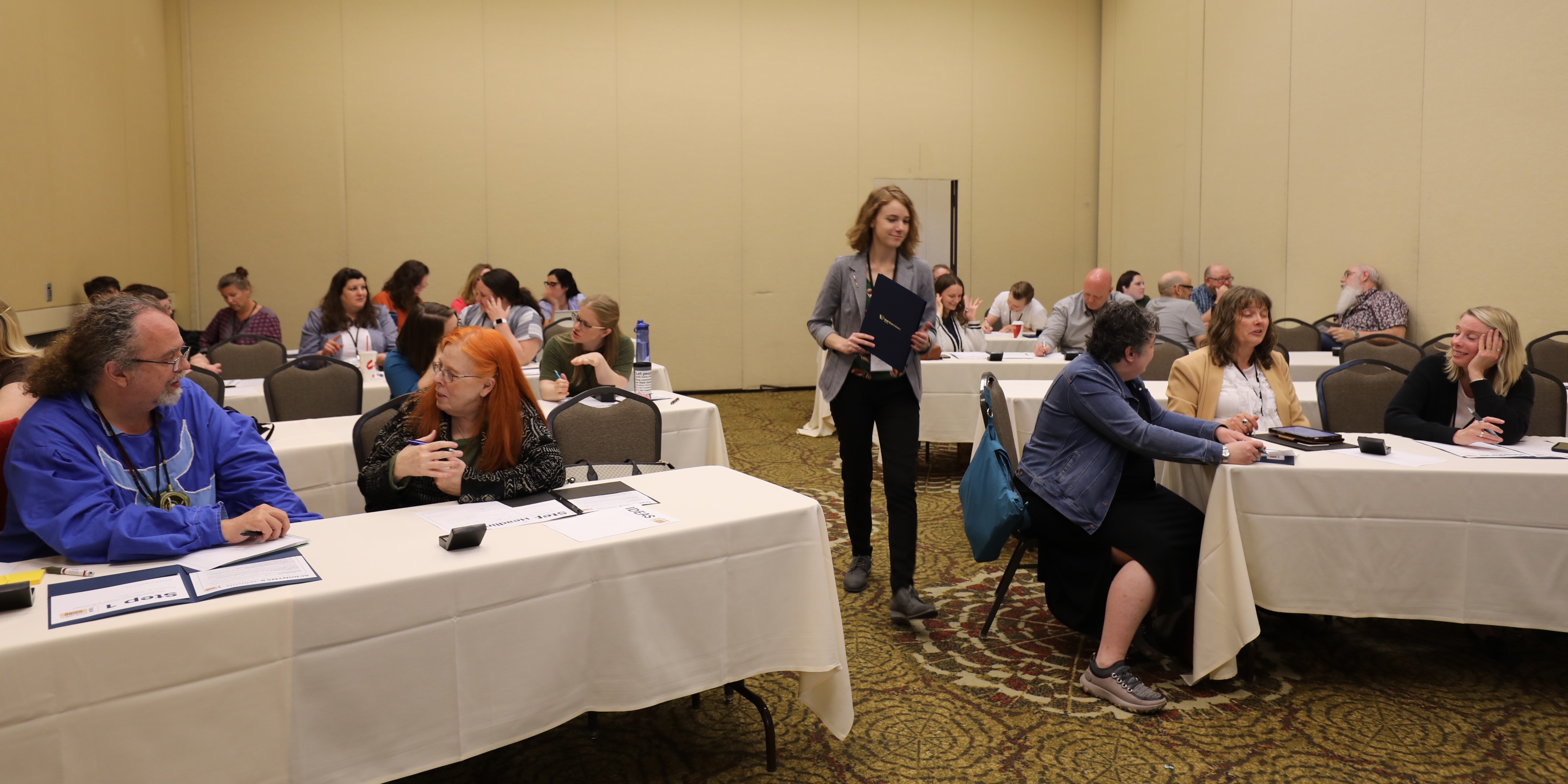
    • Includes about 60% presentation, 10% practice in pairs or groups applying tools learned, and a full 30% catered Q&A and further discussion
    • Allows time to introduce The Tech-Fearless Toolbox and get attendees comfortable using the handout before moving them into small groups to practice the skills taught
    • Best for groups sized 10 to ~90
  • NEW option: Solo learner
    • Exclusive low-cost choice for 1 individual. Perfect for anyone looking to boost their knowledge so they can be the expert for their department, library system, school district, or other organization
    • Online access to recorded 1 hour version of training content and a digital copy of The Tech-Fearless Toolbox handout
    • Bonus 1:1 call with the speaker for a personal Q&A session

Pricing is flexible depending on your needs. Libraries for Digital Equity wants to get this information to as many librarians as possible. We’ll work with your budget.